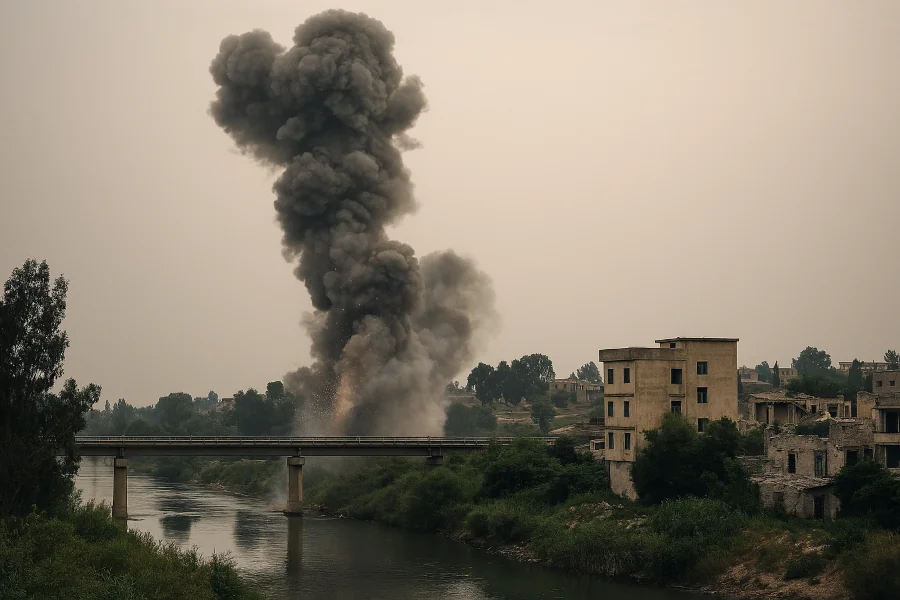
Trump Claims ‘Major Points of Agreement’ With Iran as Regional Conflict Deepens
President Donald Trump says the United States and Iran have made “very good and productive” progress toward easing hostilities in the increasingly volatile U.S.–Iran–Israel standoff.
Speaking to reporters on Sunday, Trump said U.S. intermediaries had held “strong talks” with Iranian officials and identified “major points of agreement” that could help resolve the weeks long conflict.
He added that prominent American figures, including Steven Witkoff and Jared Kushner, had taken part in discussions and that further conversations “will most likely happen over the phone today.”
Iran, however, rejects the notion that any talks are under way. While senior Iranian officials have remained publicly quiet, the semi official Mehr news agency stated that no dialogue of any kind has taken place between Washington and Tehran.
The contradictory narratives come as the Middle East faces a deepening humanitarian crisis and a rapidly destabilizing energy shock.
Since February 28, the violence has escalated dramatically. In Iran’s Lorestan province alone, officials report at least 157 people killed and more than 2,600 wounded. Across the region, the death toll has surpassed 2,000, including more than 1,200 fatalities in Iran from U.S. and Israeli strikes and over 1,000 in Lebanon.
At the time of reporting, Israel claims to have recorded only 15 deaths, though recent Iranian missile attacks have injured more than 180. We learned from other sources that more than 3,000 may have been injured. There is no way to know the real figures as Israel has imposed censorship on information relating to death and destruction.
The United States has reported 13 service members killed, along with two non combat deaths, and more than 200 injured.
Despite these mounting casualties, Trump reaffirmed his view that Israel “would be happy with an agreement” and reiterated that Iran must never be allowed to develop nuclear weapons. He also claimed that recent U.S. strikes using B 2 bombers prevented Iran from producing a nuclear device “within two weeks.”
The conflict’s impact on global energy markets has intensified pressure on all sides. The crisis has triggered the most severe energy shock since the 1970s, prompting Trump to delay planned U.S. strikes on Iran’s power infrastructure for five days in what he described as an effort to give diplomacy space and stabilize oil prices.
Tehran dismissed the move as a tactical ploy intended to “lower energy prices and buy time” for U.S. military preparation, warning that it would target regional electrical infrastructure if attacked.
The Strait of Hormuz continues to serve as the flashpoint. Iran’s blockade of the vital waterway has fueled worldwide economic anxiety.
US Treasury Secretary Scott Bessent has warned that “all options are on the table,” including the possibility of deploying U.S. troops to secure Kharg Island, Iran’s major oil export hub.
Iranian officials have responded by threatening to mine the “entire Persian Gulf” if U.S. forces advance.
Amid these tensions, the information war has intensified. Over the weekend, a spokesman for the IRGC’s Khatam al Anbiya Central Headquarters released a video mocking Trump’s signature catchphrases and boldly declaring, “You’re fired!”
Trump, meanwhile, publicly questioned whether Iran’s new supreme leader is “still alive,” noting he had “heard nothing” from him. He went further by suggesting the U.S. might look for someone inside Iran “resembling the interim president of Venezuela” to engage with, an unusually direct hint at Washington’s desire for a different negotiating partner.
Despite presenting an optimistic picture, Trump acknowledged that a diplomatic breakthrough is far from certain. He said the two sides have identified 15 potential points of agreement but conceded there is no guarantee a deal will be reached.
For now, uncertainty prevails. Both governments publicly deny each other's account of events, leaving global markets, regional militaries, and millions of civilians waiting to see whether this rare moment of de escalation talk marks a turning point, or simply another unsettling twist in an expanding conflict.
No comments on this post yet. Be the first!